
01
Suitability
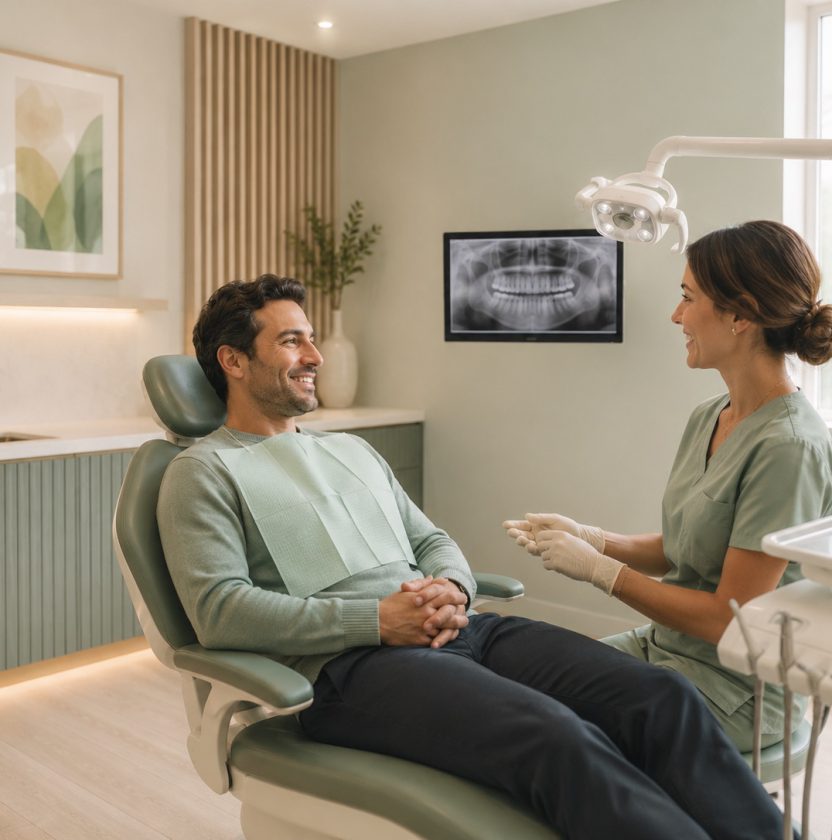
A short assessment to check whether aligners can achieve what you are after, before you commit to anything.
ALIGNMENT
A series of clear, removable aligners that move teeth gradually — planned digitally from the first appointment.
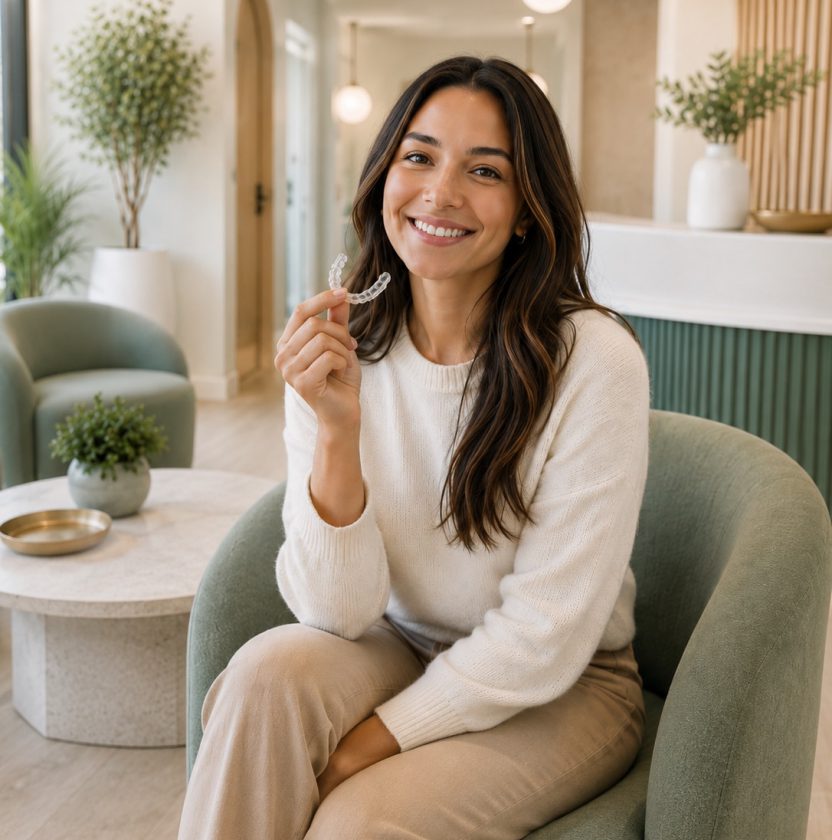
Invisalign uses a series of clear plastic aligners, each slightly different from the last, to move teeth a fraction of a millimetre at a time. You change to the next in the series roughly every week.
They come out to eat and to clean your teeth, which is the practical difference from a fixed brace.
Adults and teenagers with mild to moderate crowding, spacing or relapse after previous orthodontic treatment. More complex movements are sometimes better handled by a fixed appliance, and we will say so.
Aligners are removable, so cleaning is unchanged throughout treatment — which matters, because the commonest damage done during fixed orthodontics is decay around the brackets.
01
A short assessment to check whether aligners can achieve what you are after, before you commit to anything.
02
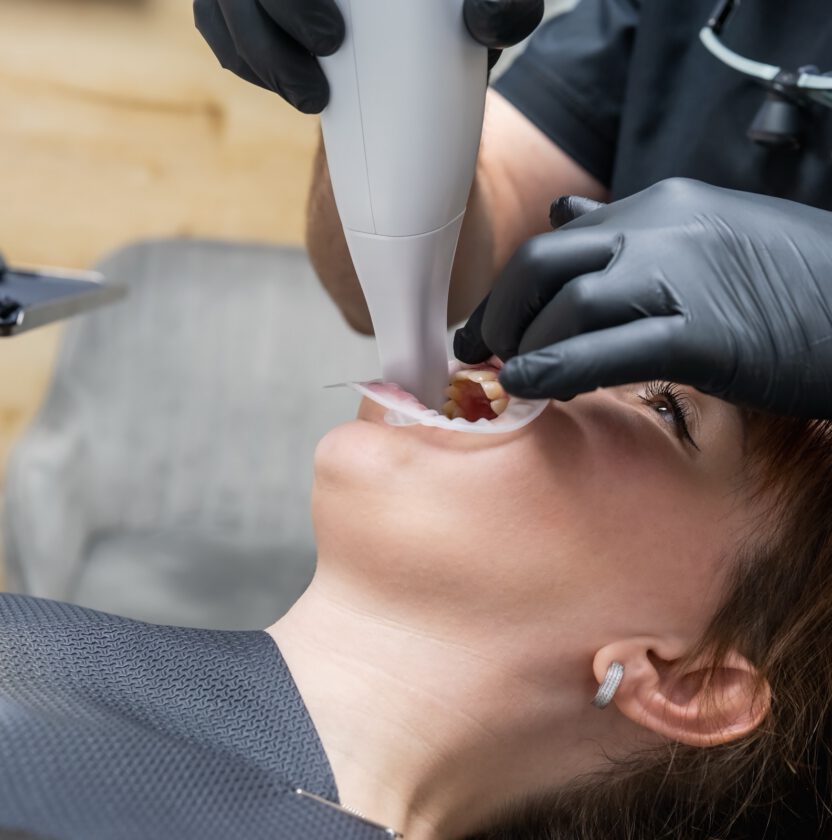
A digital scan rather than an impression tray, taking a few minutes and no gagging.
03
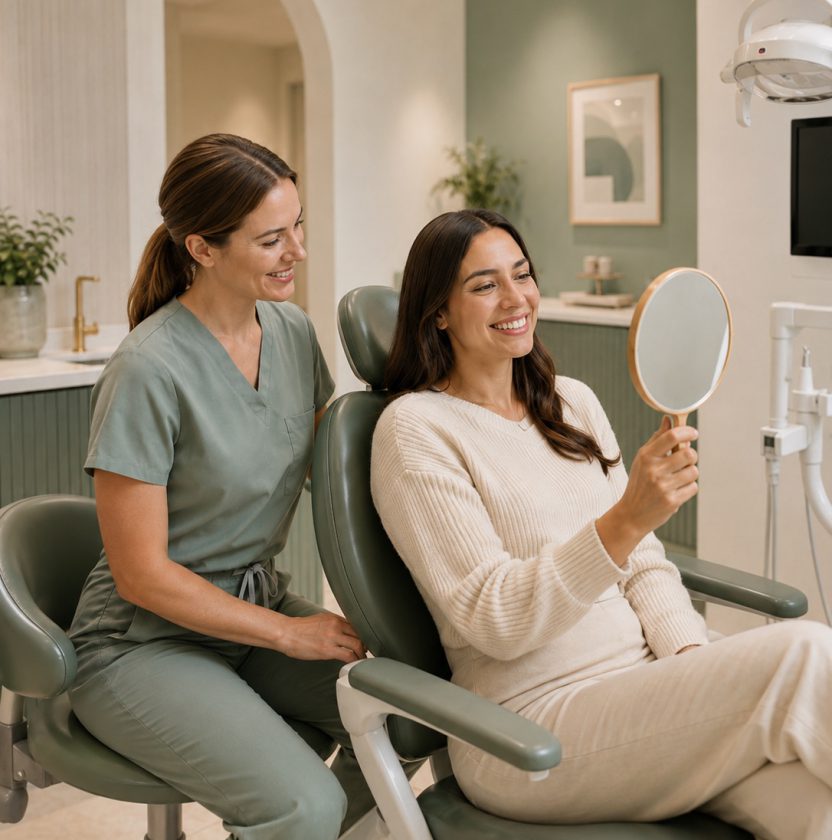
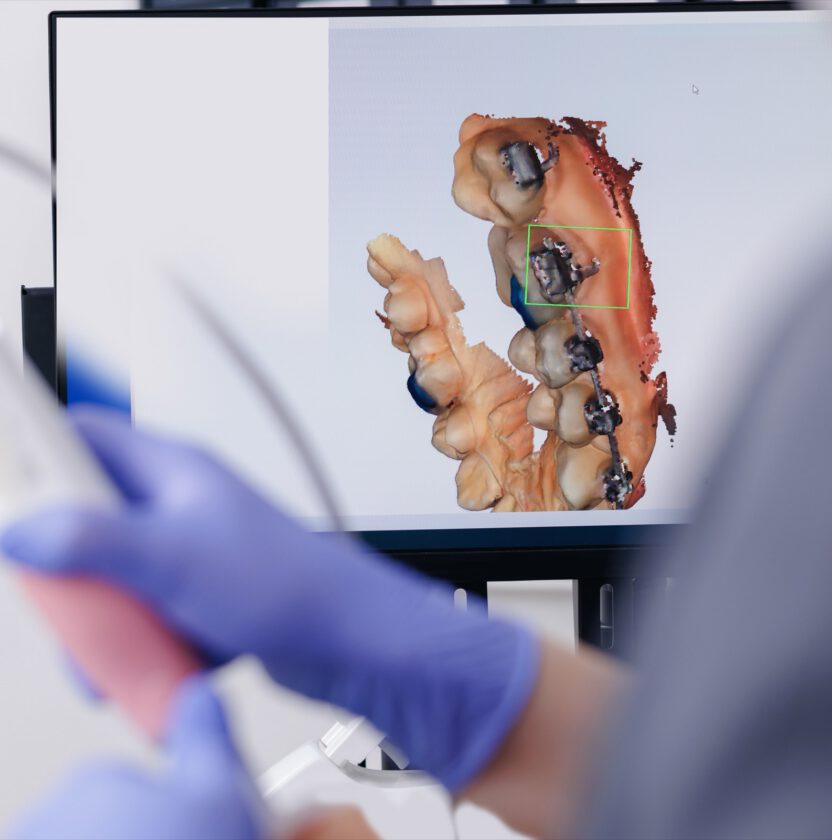
We show you the projected movement and the finished position before the aligners are ordered.

04
A new aligner roughly every week, with a short review appointment every six to eight weeks.
05
Required at the end of treatment to hold the result. Nightly wear keeps your teeth where the aligners left them.
COMMON QUESTIONS
Simpler cases finish in around six months; comprehensive treatment usually runs twelve to eighteen. You will be given an indicative number of aligners and a timeline before you commit to anything.
Rarely. The aligners are clear and thin, and they come out for eating and cleaning. Small tooth-coloured attachments are sometimes needed to move particular teeth, and those are the most visible part.
Yes, and this matters. Teeth drift back towards where they started for the rest of your life. Retainers are required at the end of treatment, and nightly wear keeps the result you paid for.
Almost everything we do is carried out under local anaesthetic, and we take time getting you comfortably numb before we start. If you would rather be more relaxed than that, sedation can be arranged — tell us when you book.