Skip to content

RESTORATIVE

Dental implants

A replacement root and crown that stands on its own, without cutting down the healthy teeth on either side of the gap.

What it is

An implant is a small titanium post placed into the jaw where the root of the missing tooth used to be. Once it has integrated with the bone, a crown is fitted on top.

Unlike a traditional dental bridge, an implant does not rely on neighbouring teeth for support. It is also fixed in place, providing a stable alternative to a removable denture.

Who it is for

Anyone missing a single tooth or several. Gum health and bone volume matter more than age, and both are assessed before we recommend anything.

Why we do it this way

When a tooth is lost, the jawbone in that area can gradually shrink because it is no longer supporting a natural tooth root.

A dental implant replaces the missing root and provides support for a new tooth. By transferring chewing forces to the surrounding bone, it can help maintain bone volume and support the natural contours of your jaw.

Unlike a traditional bridge, an implant can also replace a missing tooth without the need to reshape otherwise healthy neighbouring teeth.

How treatment works

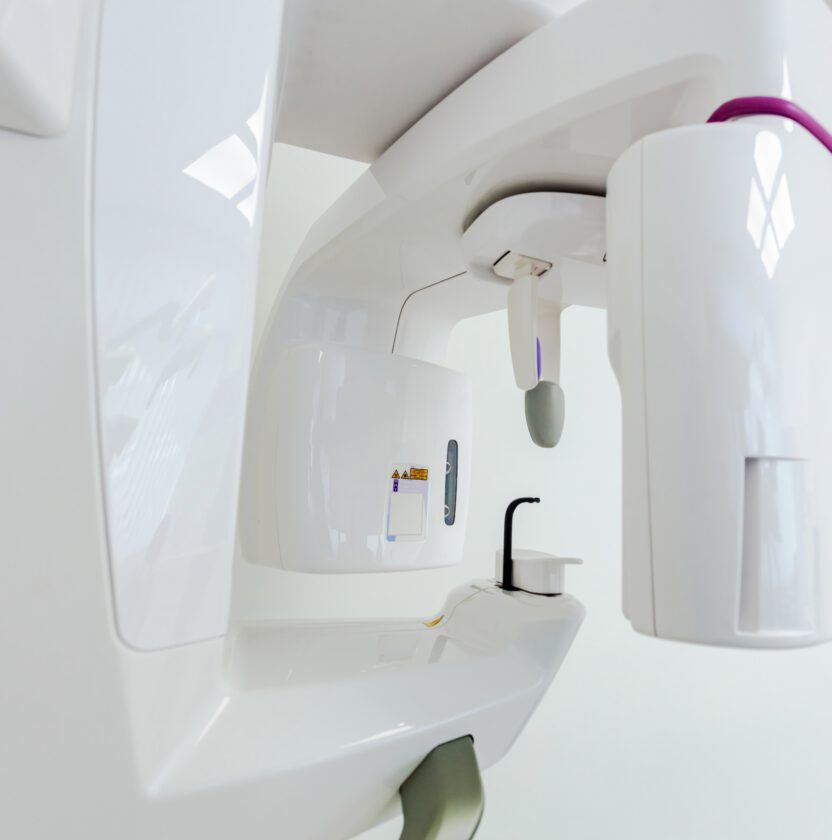
A dental cone-beam CT scanner in a bright clinic room (stock photograph, not the practice’s equipment)

01

Consultation and Digital Assessment

We begin with a thorough consultation to assess your oral health and discuss your treatment options. If you wish to explore implant treatment further, digital scans of your teeth and gums, together with CBCT imaging where clinically indicated, allow us to assess the jawbone and surrounding anatomical structures in detail.
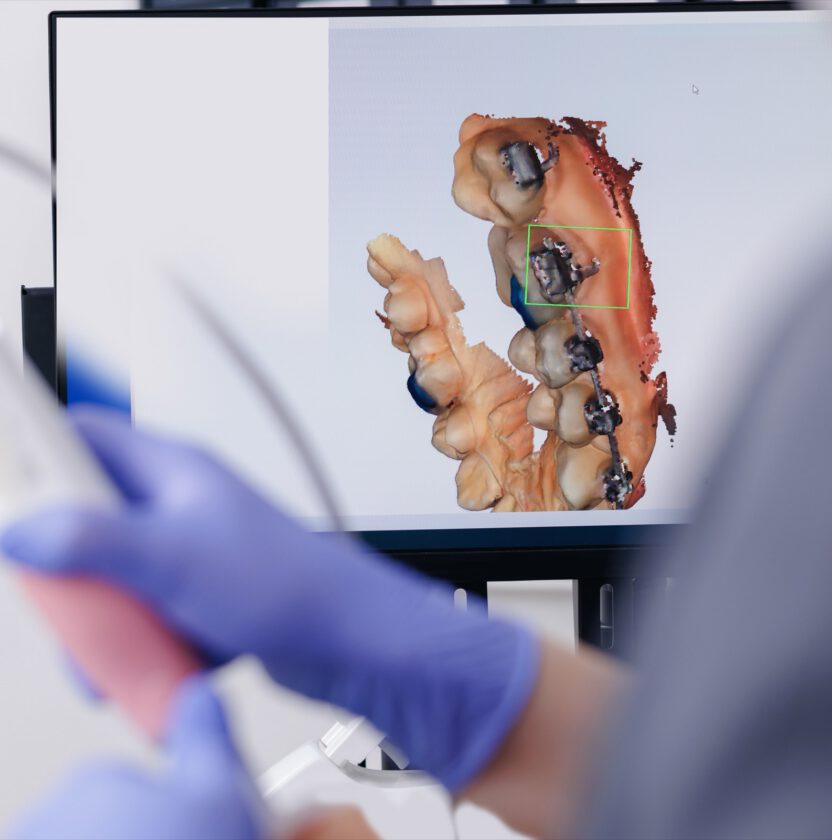
A 3D digital scan of teeth displayed on a monitor, with the scanner held in the foreground

02

Implant Planning

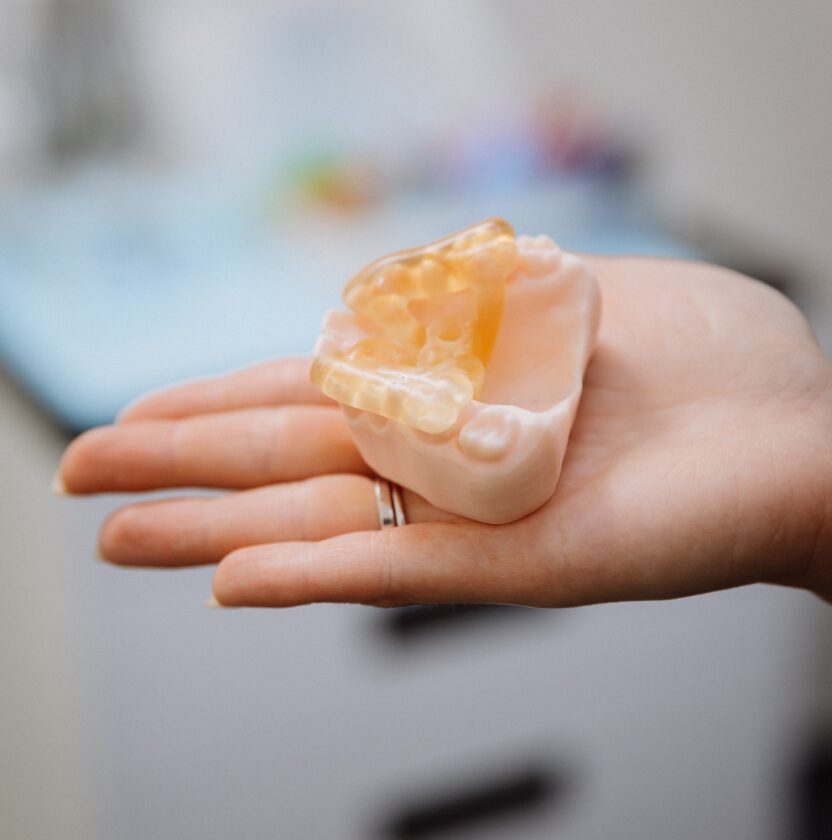
Using the information gathered during your assessment, we carefully plan the position of your implant, taking into account the available bone, neighbouring teeth and important anatomical structures. Digital planning and surgical guides may be used where appropriate.

A 3D-printed implant surgical guide seated on a printed model of the teeth, held in a hand (stock photograph, not the practice)

03

Implant Placement

The implant is carefully placed under local anaesthetic, using a surgical guide where appropriate to support precise positioning. Most patients return to work the following day.

Dental practice waiting area, Guernsey

04

Healing

The implant is allowed time to integrate with the surrounding bone, typically over several months. A temporary tooth may be provided during healing where appropriate.

Cosmetic dentistry smile result, Guernsey

05

Final crown

The permanent crown is made to match the teeth around it in shade, shape and translucency.

COMMON QUESTIONS

Things people ask us about Dental Implants

How long does an implant last?

With good hygiene and regular reviews, most implants are still doing their job fifteen years on and often a good deal longer. The crown on top may need replacing sooner than the implant itself.

What if I do not have enough bone?

This is one of the first things the 3D scan tells us. Where bone volume is short, grafting at the time of placement is usually enough. If it is not, we will say so and talk through the alternatives rather than press ahead.

Will treatment hurt?

Almost everything we do is carried out under local anaesthetic, and we take time getting you comfortably numb before we start. If you would rather be more relaxed than that, sedation can be arranged — tell us when you book.

Book with the dentist you choose